


Author: Rumiko (Rumi) Inoue (sales and marketing leader)
You might think that surface finish = anodizing or plating. However, even before taking a machined component for anodizing or plating, there is a wide range of surface finish to choose from based on the machining method itself. For example, there is as-received (which means you keep the material surface as it is), as-machined (surface that has been machined), 6F milling, and grinding finish. In this blog article, we will introduce as-received surface finish and explain when it should be used from our experience as a CNC machining company in Vietnam.

The final row shows the symbol for as-received surface finish. Formally, it indicates that removal processes are prohibited on the surface.
As-received surface finish means that the original surface of the material is kept unchanged, without performing machining on that surface. This type of surface finish is ideal for base plates where the only required CNC machining operation is tapping threads or drilling holes. We can also do it for base plates that require milling of cavities or pockets. In such cases, the non-milled part will retain surface of the material while the cavities or pockets will have machined surface finish, showing endmill lines or tooling marks.
We can also keep the original surface of the material for rounds products suitable for turning machining.
Aluminum A5052
We often do as-received surface finish for large aluminum base plates made of A5052, as high-quality Japanese aluminum of this material is available with excellent surface condition.
At Yumoto Vietnam, we use ALJADE A5052 aluminum material from Kobelco as well as High Spec (HS) A5052 Series from Hakudo. We have Japanese material available from thickness T1 mm to T80 mm. From T2 mm onwards, the material will have protective sheet on both sides of the surface to prevent the material from getting scratched. We will keep this protective covering while machining to ensure surface remains without scratch until the end.
Aluminum A2017
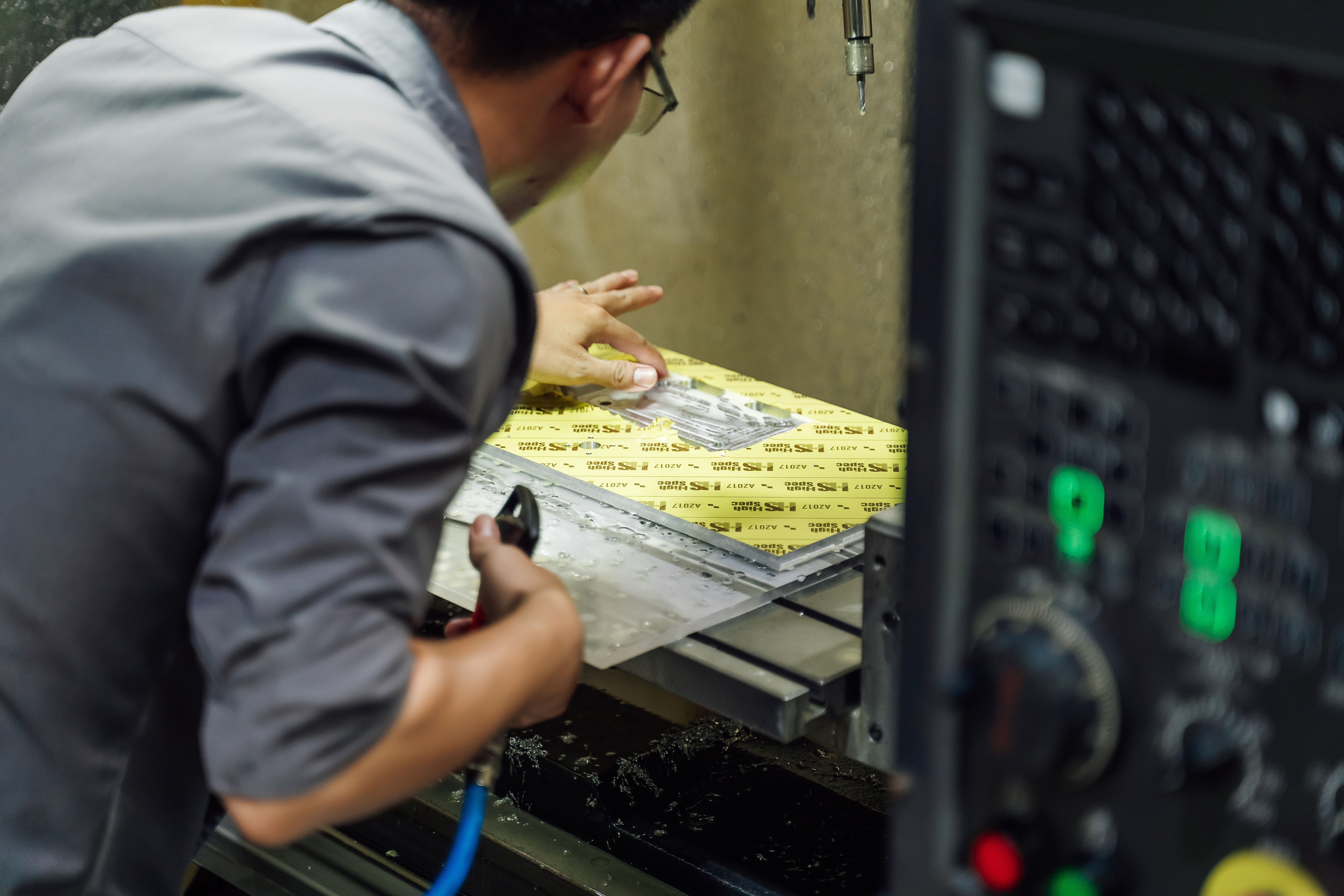
Another aluminum material suitable for as-received surface finish is A2017. Plates with thickness T20 mm or below are supplied with protective sheets, making them suitable for applications where surface appearance is important.
Stainless Steel SUS304-2B
This surface finish can also be applied to certain steel materials, such as stainless steel SUS304-2B plates. SUS304-2B has a superior, smooth finish achieved through cold rolling. We can source SUS304-2B plates in thicknesses from T1 mm to T5 mm. However, these plates do not have protective sheets, so there is a risk of light surface scratches during handling and CNC machining.
Other materials
Other materials may also be suitable for as-received surface finish, depending on the tolerance requirements and surface finish specifications on the drawing.
At Yumoto Vietnam's material warehouse, we always have various thickness of A5052 Japanese aluminum alloy available in stock so that we can support our customers with rapid prototype requests.
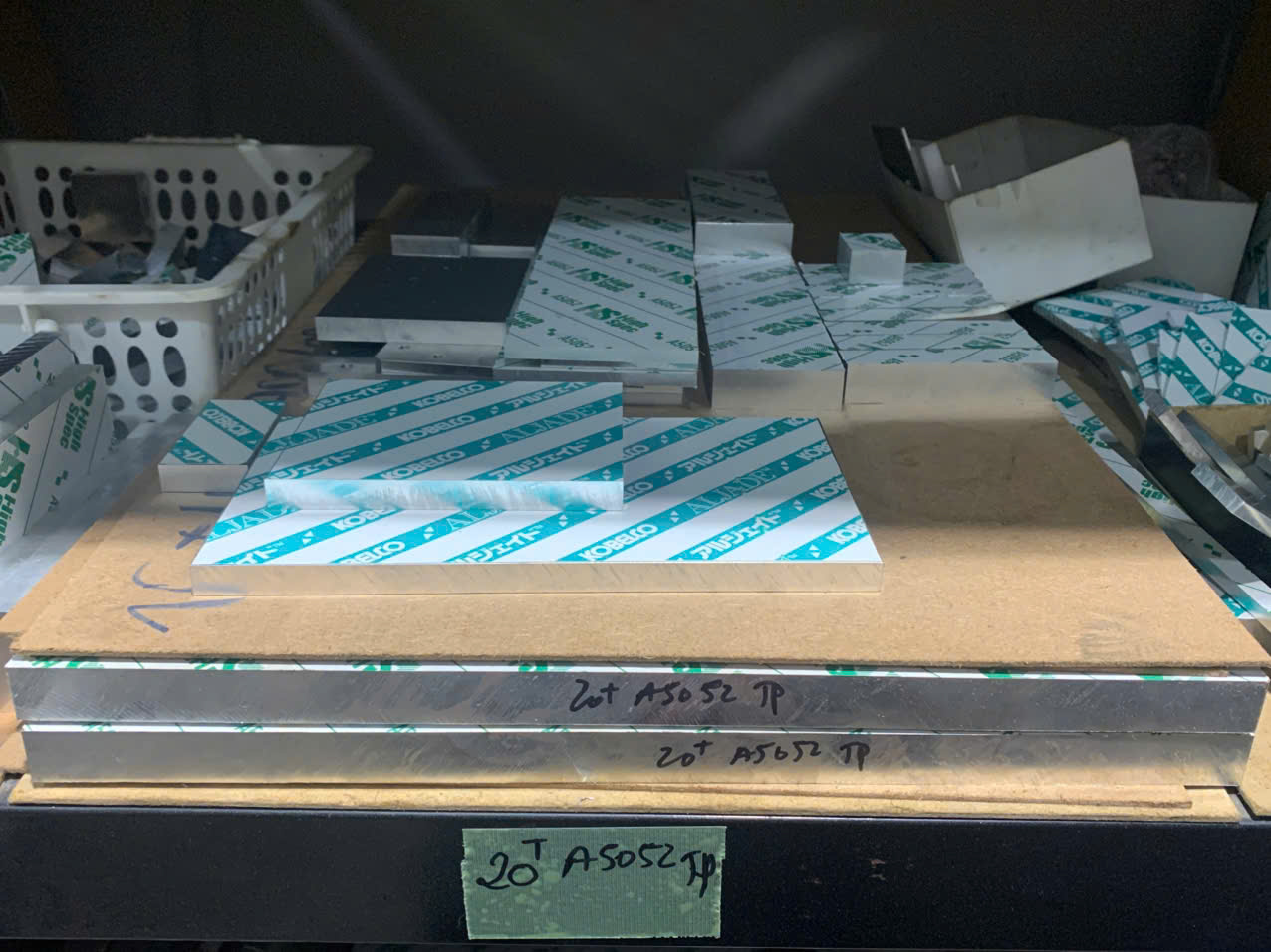
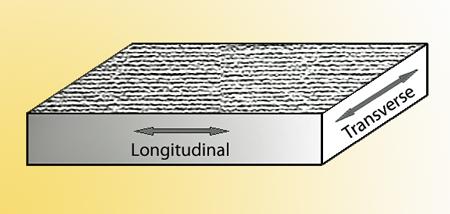
For aesthetic purposes: Some of our customers choose to keep the material surface finish because they want to avoid as-machined surface finish that show visible endmill lines or tooling marks. For customers that prioritize the appearance of products, they might also be concerned about the grain direction of the material, which is the direction that the metal plate was rolled or formed in. Our material suppliers can ensure metal plates are cut in the same grain direction for a more uniform appearance.
The image below illustrates the grain direction of the material. Longitudinal direction means parallel to the grain direction. Transverse means perpendicular to the grain direction. Grain structure is an important aspect to consider not only for aesthetic purposes but also for preventing cracking during bending procedure. You want the bending line to be along the transverse line to ensure material doesn't crack when bending.
To reduce CNC machining time: By eliminating finish milling on the surface, keeping the surface of the material can significantly reduce CNC milling time, especially for larger plates.
For tight tolerances: When drawings require tight thickness tolerances or strict geometric tolerances, as-received surface finish may be the better choice. Japanese A5052 plates with thickness under T20 mm typically have thickness tolerances of 0.05 mm or less.
To prevent warping: When we do milling process on the whole surface of large sized plates or thin plates of T4 mm or less, it can cause warping, so choosing as-received surface finish may be the better choice to prevent this from happening.
One of our senior engineers is machining a product using A2017 Japanese aluminum alloy. We keep the protective sheet on the material throughout the machining process and remove it only at the final stage, such as during deburring.
Many material types are not suitable for this type of surface finish, as the raw material surface may contain deep scratches or dents, making finish machining necessary.
Material used for this type of surface finish are of good quality but expensive. So, while keeping the surface of the material may reduce machining time, the total cost of the product may still be high due to the material costs. For example, Chinese aluminum A5052 costs around 4.80 USD per kilogram, whereas the Japanese version is around 8 USD per kilogram.
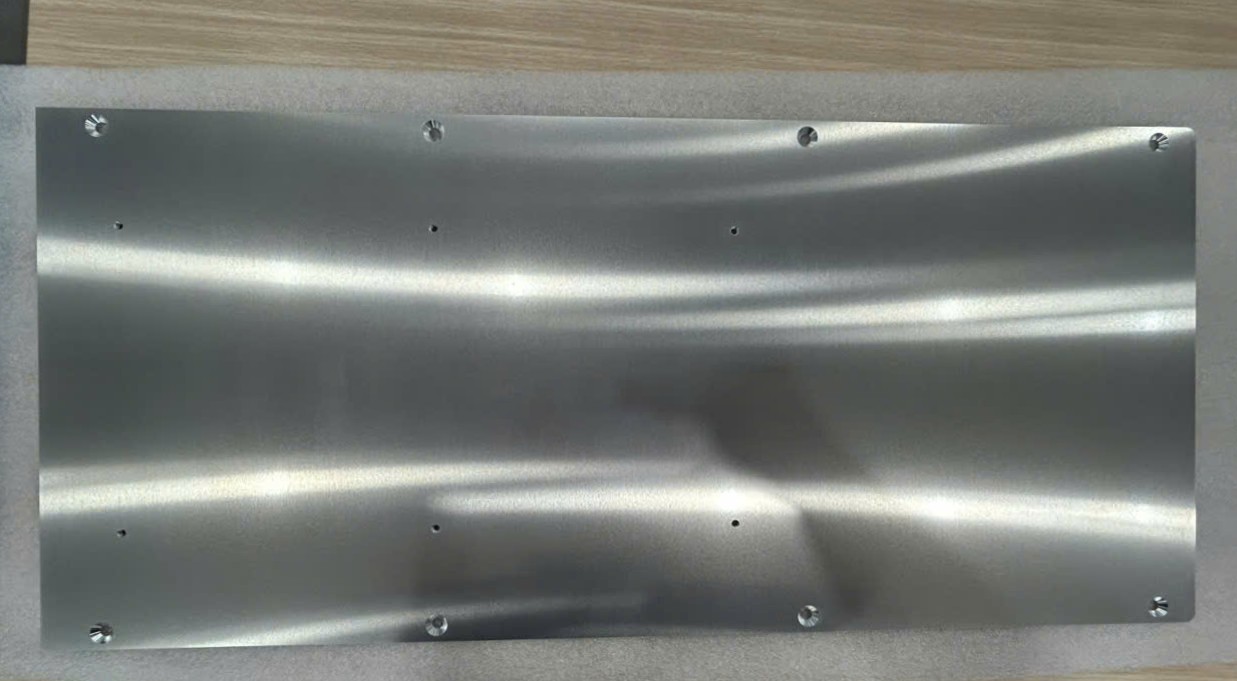
Below is an example of a large A5052 aluminum base plate produced using CNC milling with as-received surface finish, where the material surface was preserved while machining only the required features. We used Mazak 3-axis machine (VCE-570 CL) to produce this product.
Special thanks to Nathan, production manager of Yumoto, for sharing his insights for this blog article.
Learn more about Yumoto Vietnam's CNC machining service and contact us here for quotations or specific questions about our capabilities. Our sales representatives can suggest the most suitable surface finish for your machined component.


Copyright ©2023 Yumoto Vietnam Co., Ltd.


